
Residential Services
Since 1979, Payless Insulation has chosen, installed and verified insulation in Houston and Austin homes, from attics and spray foam to cotton, acoustic, removal and custom home work.
Residential insulation installed and verified by Payless Insulation in Houston and Austin
Payless Insulation has installed residential insulation in Houston and Austin Texas homes since 1979. Payless specifies the material used, installs it, and verifies the result, so the R-value a homeowner pays for is the R-value the attic keeps. Six residential services operate from our two offices: attic and blown-in insulation, spray foam, cotton insulation, insulation removal, acoustic insulation, and custom home insulation.
Request a free residential insulation quote or call the nearest office: Houston (713) 868-1021, Austin (512) 339-1021.
We serve all areas in Houston and Austin
Residential insulation services cover six needs in a Texas home
Payless Insulation installs six residential insulation services, each matched to a part of the home and a problem it solves. Every job starts with an on-site assessment and a written scope, and the same Payless Insulation crews handle new construction and the retrofit work.

Attic Insulation and Blown-in Insulation
Blown-in insulation is the standard attic retrofit for Houston and Austin homes. Payless Insulation blows Celbar cellulose or fiberglass into attics and open wall cavities to a specified installed density, which is what keeps the R-value from settling away over time. See blown-in insulation for materials and coverage.

Spray Foam Insulation
Spray foam seals and insulates in one application, and it comes in two types. Open-cell foam is lighter (about 0.5 lb per cubic foot), insulates at R-3.5 to R-3.9 per inch, and lets water vapor pass through. Closed-cell foam is denser (about 2 lb per cubic foot), insulates at R-6.0 to R-7.0 per inch, and blocks moisture, so it also works as a vapor retarder. Payless chooses between them based on the full assembly, meaning every layer of the wall, floor, roof or ceiling.
Cotton Insulation
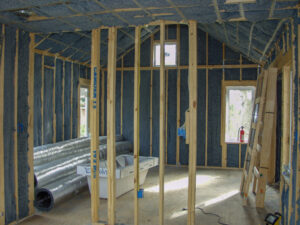
Cotton insulation is a recycled-denim batt for homeowners who want a breathable wall or a quieter room. It resists moisture, dampens sound, and installs without the off-gassing period spray foam requires.

Acoustic Insulation
Acoustic insulation reduces sound transmission through shared walls, floors, and home offices. Payless fills those cavities with Celbar cellulose or cotton batts to raise the Sound Transmission Class (STC), the rating for how much sound a wall or floor blocks.

Custom Home Insulation
Custom home insulation is specified during planning, before the walls close in. Payless Insulation works with the builder and architect to place the air barrier and insulation in contact with each other, which is the condition a thermal envelope needs to perform. The thermal envelope, or shell, is the insulated outer boundary that separates the heated and cooled inside of a home from the outdoors.

Residential Insulation Removal
Insulation removal is the first step whenever the existing material is wet, contaminated, settled, or in the way of the new assembly. Payless Insulation contains, vacuums, and disposes of the old material before anything new goes in.
Should a Texas home be sealed tight or left breathable?
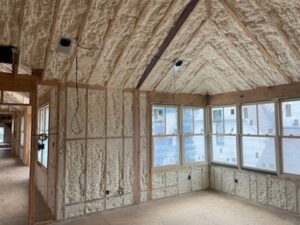
Both approaches work in Houston and Austin, and the house decides which one fits. A tight home uses spray foam to seal the envelope, the home’s insulated outer shell, and turns the attic into semi-conditioned space. A breathable home uses cotton or treated cellulose and keeps the attic vented. Each has prerequisites the home has to meet before the work is scheduled.

Tight Sealed Home
A tight home, with the attic sealed in spray foam, has more requirements. Gas appliances must vent properly, and the furnace must be a sealed-combustion, 90 percent condensing natural gas unit. Most of the existing attic insulation, 85 to 90 percent, comes out before the foam goes in. Every attic area must be reachable without low-clearance spots, and by code the attic cannot be used for storage unless a thermal barrier is added. The household needs to leave for 24 hours after the foam is applied, and Payless can install a zero-VOC product for clients who need one.
Breathable Home
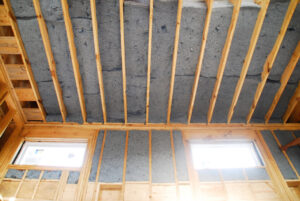
A breathable home needs four things in place before insulation goes in. The attic must be accessible, and the return air must be sealed. Recessed light cans in the ceiling must be IC-rated, meaning they are safe for direct contact with insulation, or have barriers built around them. The attic also needs ventilation through soffit vents, ridge vents, air hawks or attic fans.
Residential insulation in Houston and Austin is built to the 2021 IECC in Climate Zone 2A
Houston and Austin both enforce the 2021 International Energy Conservation Code, two editions ahead of the Texas state baseline of 2015. Both cities sit in Climate Zone 2A, a hot-humid, cooling-dominant zone, and the code sets a minimum attic R-value for that zone that Payless Insulation designs to on every residential job. Which code applies to your project and what a Houston attic needs under the 2021 IECC go into the specifics.
Cooling-dominant means the house spends most of the year keeping heat and humidity out, not holding warmth in. Moisture tends to push from the warm, humid outside toward the cooled inside, which is the reverse of what insulation advice written for cold northern climates assumes.
In a Gulf Coast or Central Texas attic, closed-cell spray foam acts as the vapor retarder, open-cell foam and cellulose let vapor move, and the right choice depends on whether the attic is vented or sealed. Payless Insulation reads the assembly, again the full layered build-up of the wall or attic, before it recommends the material.
Residential insulation performance is specified, installed, and verified
Payless Insulation is accountable for the R-value a home keeps, not the R-value printed on the bag. Three practices make that a checkable claim:
- Air sealing comes first. Insulation blown over unsealed penetrations, unsealed attic hatches, and open top plates loses performance to air movement. The Payless Insulation crew seals before it insulates.
- Installed density is specified. Blown cellulose settles unless it is installed at the density the manufacturer specifies. Payless Insulation installs to that density, which is also the condition the settling warranty rests on.
- Attic preparation is part of the job. Payless Insulation keeps the attic’s airflow path clear with soffit baffles, the guides that stop insulation from blocking the vents, seals the attic hatch so it becomes part of the home’s air barrier, and makes sure recessed lights are rated or shielded before any material goes in.
Payless Insulation has held an A+ Better Business Bureau rating since 1980, works bonded and insured, and is a certified weatherization contractor for the City of Houston, CenterPoint Energy, and Baker Ripley. The full list is on the certifications and awards page.
Existing homes and custom homes are insulated differently
Existing homes are retrofit work, and custom homes are planning work. In an existing home, the Payless Insulation crew works around what is there: settled material, obstructed cavities, ductwork, and older wiring. Payless Insulation has specialized in that work since 1979 and picks the longest-lasting material the assembly supports. View featured residential projects.
In a custom home, the value is in the planning stage. Bringing Payless Insulation in before framing closes avoids the three most expensive corrections: an air barrier that does not touch the insulation, a vented attic where a sealed attic was the right call, and wall cavities that can no longer be dense-packed, or tightly filled with insulation, once the drywall is up. Proper specification at that stage lowers heating and cooling costs for the life of the house and extends the life of the air conditioning equipment.
Answers to common questions about residential insulation in Texas
What R-value does an attic need in Houston or Austin?
The 2021 IECC sets the minimum attic R-value for Climate Zone 2A, and both cities enforce that edition. Payless Insulation states the required value and the installed target in every written quote. What a Houston attic needs under the 2021 IECC covers the number and the code basis.
Does old insulation have to come out before new insulation goes in?
Old insulation comes out when it is wet, contaminated, settled below its rated depth, or blocking the assembly. Dry, clean, uncontaminated material stays and gets topped up. The assessment makes that call before the quote.
Is spray foam safe inside a home?
Cured spray foam is inert, and the safety window is the application itself. For a tight-home spray foam job the property is vacated for 24 hours after application while the foam cures and the space ventilates. The Payless Insulation crew confirms the re-entry time.
How long does a residential insulation job take?
Most attic retrofits in Houston and Austin are completed in one day. Whole-house spray foam on new construction and jobs that start with removal run longer, and the written scope states the schedule.
What does the warranty cover?
Payless Insulation warranties residential work for one year to 10 years depending on the material, and spray applications for five years. The settling warranty on blown cellulose depends on the installed density the Payless Insulation crew specifies and records.
Request a residential insulation quote in Houston or Austin
Payless Insulation quotes residential work from two offices. Houston: (713) 868-1021, 1830 W. 15th St., Houston, TX 77008. Austin: (512) 339-1021, 2200 Denton Dr., Suite 111, Austin, TX 78758. Office hours are Monday through Friday, 8 AM to 5 PM, with emergency service available 24/7.
Tell Us How We Can Help